Death · 23 November 1940
Death of Ernest Amory Codman
Ernest Amory Codman, who died on 23 November 1940, was a Boston surgeon whose legacy extended far beyond an operative specialty. He argued that hospitals should follow every patient long enough to learn the true result of treatment, identify failures and change practice. This “End Result Idea” sounds simple today, but it challenged professional habits and institutional reluctance to publish outcomes. Codman applied the method to his own practice, classified errors and promoted registries able to compare diagnoses, treatments and subsequent course. In this way he anticipated clinical audit, quality assessment and a culture of safety.[1][2]
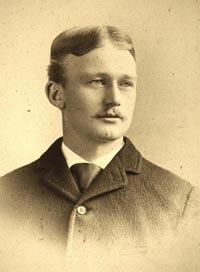
Credit and rights
Photographe inconnu, via Wikimedia Commons · Public domain
Original source · LicenceKey dates and milestones
- 30 December 1869
Born in Boston, Massachusetts.[2]
- 1895
Graduated from Harvard Medical School and trained in surgery at Massachusetts General Hospital.[2]
- 1899
Worked as the first skiagrapher at Boston Children’s Hospital and participated in the early clinical use of radiological imaging.[2]
- 1904
Developed the idea of systematic follow-up of every patient’s final result.[2]
- 1911
Opened his own hospital to apply his principles of accountability and measurement.[2]
- 23 November 1940
Died in Ponkapoag, Massachusetts, after a career marked by ideas that had long been contested.[1]
Contributions to medicine
- Codman defined longitudinal follow-up centred on the patient’s actual outcome. Performing a procedure was not enough: the institution had to know what happened next and learn from every failure.[2]
- He organized a bone tumour registry to improve classification and case sharing. This approach anticipated disease registries, collaborative research and outcome comparison.[2]
- His work on the shoulder helped structure clinical and surgical study of the joint. In parallel, his advocacy for hospital standards contributed to the history of accreditation.[2]
Documented anecdotes
Publishing his own errors
Codman did not limit his programme to criticism of others. He published his outcomes, classified errors and showed how they could become tools for learning. This transparency brought resistance, but it also explains the modern character of his legacy.[2]
Documentary sources
- November 23 — On This Day in Medical History
Life in the Fast Lane
- Ernest Amory Codman: the end result of a life in medicine
National Library of Medicine / PubMed Central